
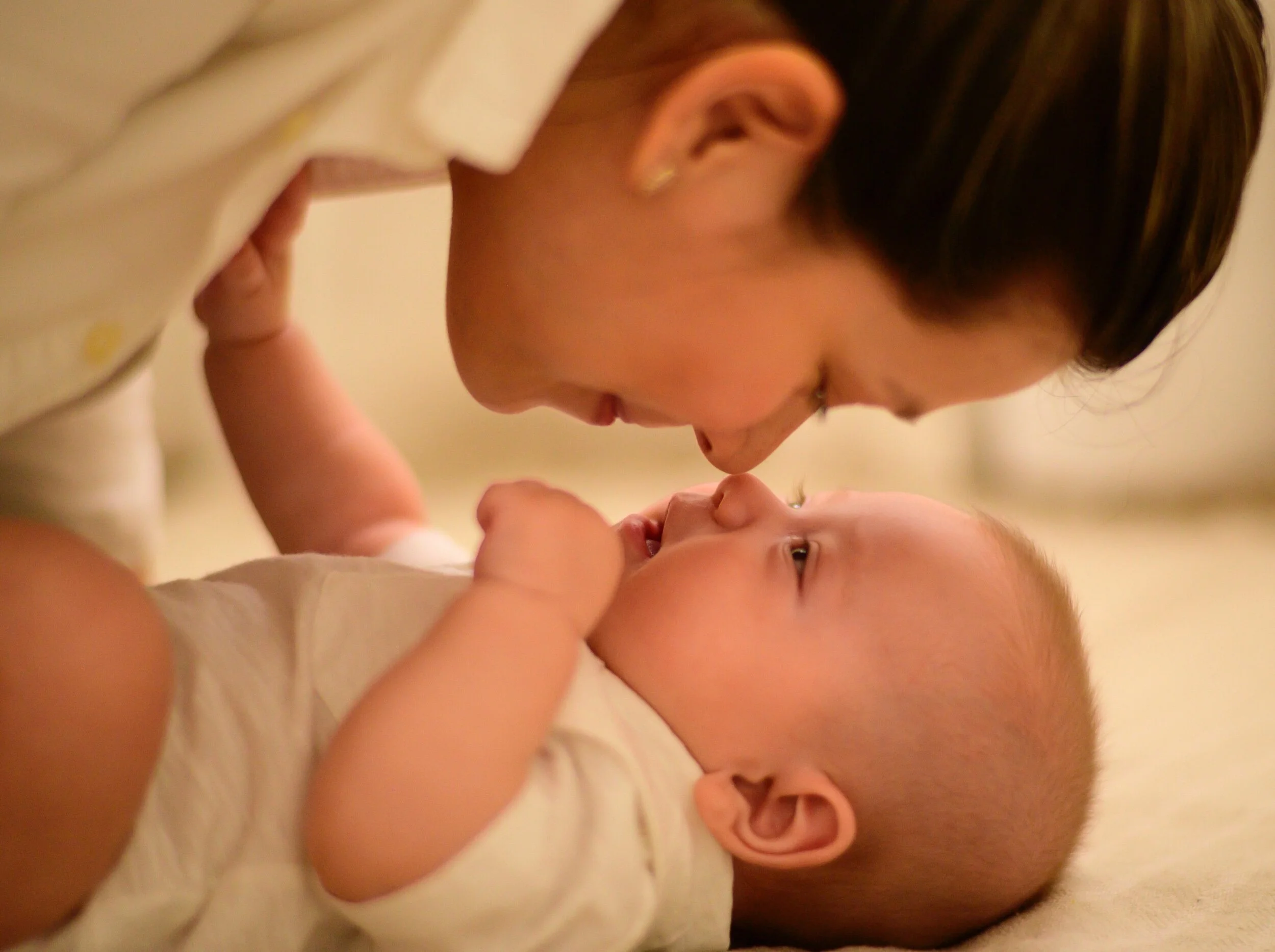
Is this postpartum depression? Anxiety? Baby blues? All I know is I don't feel myself
Do you find yourself asking this question? I remember being so paranoid shortly after my second was born about having postpartum depression. Knowing what the symptoms were I felt I was always on the lookout.
Do you find yourself asking this question? I remember being so paranoid shortly after my second was born about having postpartum depression. Knowing what the symptoms were I felt I was always on the lookout. Looking back I know I had postpartum anxiety and I think I was in denial about how I was feeling. I have always had underlying anxiety, but after my second was born it culminated and I was anxious about things that didn't worry me before to the point of feeling panicked at times and fears around leaving the house or reaching out to people to connect and spend time with them, even friends and family. I felt on edge a lot.
After I had decided I wanted to work with pregnant and postpartum women with depression and anxiety, I learned how prevalent it is and how it can impact your children and family life for years to come.
Okay, but you are still wondering if you have postpartum depression or anxiety. The symptoms can manifest differently with each woman and each woman’s experience is unique to them. But,
I can say getting help and learning ways to manage how you feel and having a toolbox full of self care strategies and relaxation techniques will always be beneficial to your well being.
Screening Edinburgh Postnatal Depression Scale
This is the most common and frequently used screening to determine if a woman has symptoms of postpartum depression. It is not a formal diagnosis tool, but it is validated to determine if a referral is recommended for outpatient counseling services.
Here is a link where you can take the screening yourself and it will give you results instantly, if you score above the cutoff it may recommend that you seek out counseling services or speak to your primary care physician about your results.
Edinburgh Postnatal Depression Scale: EPDS
Baby Blues
Weepiness or crying for no apparent reason
Impatience
Irritability
Restlessness
Anxiety
Fatigue
Insomnia (even when the baby is sleeping)
Sadness
Mood change
Poor concentration
Lots of women have what is called “baby blues” 2-3 weeks post birth of baby; up to 80% of women. And usually go away on their own. If you are continuing experience the symptoms listed above past the first month postpartum, you could be suffering from postpartum depression.
Here are some common symptoms of postpartum depression and anxiety
Feeling sad, hopeless, or overwhelmed more days than not
Crying for no reason or more than usual
Worrying or feeling anxious
Constantly worrying something bad may happen to your baby.
Irritability or moodiness
Sleeping too much or not being able to rest or sleep when baby sleeps
Having trouble concentrating
Lost interest in activities you used to find enjoyable Change in appetite eating too much or not enough
Avoiding family or friends, feeling withdrawn
Having trouble bonding with your baby or not feeling emotional attachment to your baby
Constantly doubting your ability to care for baby
Having scary thoughts
Thoughts of harming yourself or your baby
Feeling rageful
Postpartum depression or PPD or Perinatal Mood and Anxiety Disorders can affect any woman.
The terminology has changed to Perinatal Mood and Anxiety Disorders (PMAD) to encompass depression and anxiety, and to include pregnant women.
Here is a blog post on Postpartum OCD (Obsessive Compulsive Disorder) to read more on how those symptoms differ from postpartum psychosis.
If you aren’t feeling yourself, reach out for help. Right now we are all feeling more isolated and with having a new baby or expecting a new baby, the support and resources that are typically available to pregnant and postpartum women aren’t as available during the pandemic as before and we are unsure when everything will begin to reopen.
If you or a loved one are struggling and need additional support, please seek out care.
I specialize in working with women who are looking for postpartum depression treatment helping them find joy, relief, and balance in their lives.
You can call me at 970-795-2100
with care,
Alison

5 Interesting Mental Health Facts about Colorado
WIth the current state of the world, our lives have made a dramatic shift from our everyday routines. There is a lot of uncertainty and there are no definite answers when life will return to normalcy.
With this in mind, it is key to take care of your mental well being. I remember reading an article a couple years ago reporting that Colorado was one of the worst states for lacking access to mental health services for adolescents in the United States. That fact really shocked me and is cause for concern especially since suicide rates are the increase and Colorado is 6th in the nation. Colorado has a lot of rural areas that lack access to care and stigma is still high about reaching out for mental health problems.
WIth the current state of the world, our lives have made a dramatic shift from our everyday routines. There is a lot of uncertainty and there are no definite answers when life will return to normalcy.
With this in mind, it is key to take care of your mental well being. I remember reading an article a couple years ago reporting that Colorado was one of the worst states for lacking access to mental health services for adolescents in the United States. That fact really shocked me and is cause for concern especially since suicide rates are the increase and Colorado is 6th in the nation. Colorado has a lot of rural areas that lack access to care and stigma is still high about reaching out for mental health problems.
Listed below are 5 facts specific to the mental health of Colorado:
Colorado’s suicide rate is 19.1 in 100,000 (2012) 6th highest in the nation.
Higher percentages occur in rural/frontier areas than in urban areas.
Challenge of access to mental health care
39 counties do not have a practicing psychiatrist and 22 counties do not have an active licensed psychologist
Stigma still on the rise
1 in 10 Coloradoans stated they did not receive mental health treatment when they needed it and 1 in 4 did not reach out for mental health treatment about fears about what others would think about them.
Critical need in Colorado
1 in 4 teens report severe depression
Teen girls are 2x as likely to report feeling depressed over teen boys
250,000 Coloradoans misuse prescription drugs
Seniors are the least likely to report poor mental health
1 in 10 Colorado moms reports postpartum depression (10.5%)
About 74.3 percent of new moms during prenatal care visits included discussions of pregnancy-related depression
Less than 30% of moms who report postpartum depression seek out mental health treatment
Good mental health promotes good overall health
During this pandemic, reach out to friends and family, limit time watching to news or spending time on social media, engage in activities that are relaxing, soothing, and bring you joy.
Consider reaching out to those you haven’t spoken to in a while, it may go a long way. We are feeling more isolated now than ever and lack of access to fun outings and connections with others can lead to sadness and an overall sense of loss. Spread kindness and let others know you are there for them.
If you or a loved one are struggling, please don’t hold back in reaching out for help.
Here is a list of helpful resources:
https://www.mentalhealthcolorado.org/dashboard/
https://www.nami.org/Learn-More/Mental-Health-By-the-Numbers
https://www.postpartum.net/get-help/help-for-moms/
National Suicide Prevention Lifeline 1-800-273-8255 www.suicidepreventionlifeline.org
With care,
Alison
Alison is the owner of Hartman Therapy in Colorado. She offers online counseling helping tired, overwhelmed moms, sad teens, and frustrated parents. Alison has been working with adolescents, families, and adults for the past 7 years helping to build healthy, resilient families. She specializes in perinatal mental health and teen girl depression and anxiety.

How to maximize your emotional well being when modern life hits pause
The past 2 weeks have felt like a whirlwind and it seems like rules and precautions are changing by the hour. I think everyone is feeling uneasiness and worry and that is okay. What we are all experiencing is historic and is shifting our sense of normalcy and routine. There are a lot of unknowns and when we have unknowns this can lead to fear and we tend to fill in the unknowns with worst case scenarios.
The past 2 weeks have felt like a whirlwind and it seems like rules and precautions are changing by the hour. I think everyone is feeling uneasiness and worry and that is okay. What we are all experiencing is historic and is shifting our sense of normalcy and routine. There are a lot of unknowns and when we have unknowns this can lead to fear and we tend to fill in the unknowns with worst case scenarios.
We are in this together and no one is not affected by this pandemic.
A day before schools were cancelled, my daughter was sharing with me that her hands were shaky all day. I asked her why and she said, “I am worried about the coronavirus”. That one hit close to home for sure, my little first grader still trying to figure out life and school is telling me how scared she is. I tried to create some sense of safety with her, we talked about what she was afraid of more in depth and what her dad and I were doing in order to keep her safe. We also discussed what our days would look like if school were cancelled. This way she had some sort of idea what was going on and what steps we were taking as a family. Still there is this overarching sense of anxiety around.
Our bodies naturally respond to challenging situations by engage our nervous system in flight or fight. Since we are experiencing this crisis it's natural for some of us to panic, while others may shut down.
Below are some ways to manage and regulate through this crisis we are in. They are not going take away your anxiety, but will help you get through your day and hopefully provide some sense of control and stability.
Deep Breaths
Taking long soothing breaths throughout your day is a good way to ground yourself and create a sense of safety.
Be Honest
Share how you are feeling. It's okay to say you are scared and worried. If you have children it's also okay to tell them this, they are probably feeling it too. Have a conversation with your children and let them ask you questions. This will help them fill in their gaps in the unknown. Kids are like sponges they will feed off of your anxiety whether you realize or not they notice.
Deep Pressure
Applying pressure, using your hands to gently push on your head, arms, and legs. This one is my favorite and instantly creates a feeling of calm.
Being an external regulator
Practicing these soothing, grounding skills will help you relax and help those to relax around you. We are impacted by the nervous systems of those around us, even if they aren't saying anything. Just like, have you ever walked into a room and you can just “feel the tension”, that's your nervous system signaling how others are feeling. Practice responding, not reacting.
Create structure/new routines and a sense of normalcy where you can
Whether you have children at home or not, try to have a plan for how you will spend your day. This will help create purpose and a sense of safety, especially as we are social distancing. If you have children, share with them the plan for the day so they know what to expect.
Building regulation into and throughout your day
Regulate and take care of yourself throughout the day. It doesn't take extra time to take deep breaths or apply deep pressure. Regulating your nervous system during the day will help you feel more connected to yourself and create a sense of calm.
Remain connected with friends and family
Find ways to continue connecting with friends and family while practicing social distancing. This can be phone calls, facetime, skype, etc.
This will help feed your need for connection and create a sense of safety without relying on external input. For instance, scrolling social media or watching news updates constantly. Take breaks from this constant input of stimulus as it is probably causing increased anxiety and worry.
Additional regulating activities
Eat something crunchy
Bounce on yoga ball
Sing (can do with the kids)
Dance
Take a hot bath or shower
Drink through a straw
Wrap up in a blanket and snuggle
Play classical music if anxious, worried, hyper-aroused
Play hard rock, fast paced music if hypo-aroused, tired, and low energy
Wall push ups or push hands together
Doodle/color
Fidget with stress ball or play doh
Paint, draw
Put cold or warm towel on your face
Dim the lights
Read a book
Yoga
Pray
Move, move, move your body
Try a few of these and pay attention to how you feel afterwards.
Stay healthy, stay connected, be kind
with care,
Alison
Please reach out by phone or email if you would like to discuss if counseling would be a good option for you.
You can also call me at 970-795-2100 or email me alison@hartmantherapyco.com if you would like to talk further if this is a good option for you.
Alison is the owner of Hartman Therapy in Colorado. She offers online counseling helping tired, overwhelmed moms, sad teens, and frustrated parents. Alison has been working with adolescents, families, and adults for the past 7 years helping to build healthy, resilient families. She specializes in perinatal mental health and teen girl depression and anxiety.

What No One Tells You About Postpartum Depression
With maternal mental health more and more in the media and gaining recognition as an issue needing to be addressed. There is still a lack of screening at pediatricians and OB-GYN offices and options for moms can be limited in regards to treatment if they are struggling with mental health issues, specific to the prenatal to postpartum period.
Stigma is still present and moms are hesitant to start therapy due to barriers to access of services or for a multitude of other reasons; transportation, finances, or they don’t think it is that bad.
With maternal mental health more and more in the media and gaining recognition as an issue needing to be addressed. There is still a lack of screening at pediatricians and OB-GYN offices and options for moms can be limited in regards to treatment if they are struggling with mental health issues, specific to the prenatal to postpartum period.
Stigma is still present and moms are hesitant to start therapy due to barriers to access of services or for a multitude of other reasons; transportation, finances, or they don’t think it is that bad.
But screening, early intervention, and prevention can make a difference significant in treating postpartum anxiety and depression symptoms earlier so that moms can function and feel like they have the knowledge and skills needed to feel happier, healthier, and confident in themselves as a parent during this major life transition.
Onset of postpartum depression (PPD)
Postpartum depression can start during pregnancy or within days after giving birth all the way up to a year postpartum. Sometimes this can be overlooked, especially from healthcare providers who are not screening women during prenatal or postpartum follow up visits or at the pediatrician’s office. Screening during these visits is so important and I cannot stress this enough. It allows your doctor to determine what referrals to provide you for additional support and services. This can range from postpartum groups, parenting classes, mental health services, or higher level of care if needed.
Advocating for yourself
If your healthcare providers are not screening for postpartum depression during your visits I would ask them “why not?” By asking this question you are not only advocating for yourself, but for other women as well.
Healthcare providers may say they don’t really see much of it in their patients. But if they aren’t asking the questions, a lot of times people aren’t going to share the information openly.
When we think about this it is really about prevention, better to get the resources and information you need to be successful as a mother and parent sooner before symptoms worsen.
Edinburgh Postnatal Depression Scale (EPDS)
Here is the link to a screening tool that is evidenced based and validated for use for postpartum women. It is specific to postpartum women because some of the somatic symptoms of depression like fatigue, change in appetite, sleep problems come with being pregnant and postpartum and it hard to decipher between the two, this is why screening specifically for postpartum is so important and why healthcare providers often miss depression during the postpartum period.
You can complete the screening tool and it will give you results instantly. You can take this to your next doctor’s visit and discuss it with them. If you live in the state of Colorado, you can contact me and we can discuss your results and your options.
Edinburgh Postnatal Depression scale (EPDS)
https://psychology-tools.com/test/epds
5 Signs of Postpartum Depression
Shame and guilt
New moms can have opposing feelings after having a baby and it can be confusing and lead to feeling guilty or shameful for the thoughts or feelings they may be having. For instance, feeling like what you are going through as a new mom is “not fair”, having this big sense of responsibility for taking care of a newborn that can feel too overwhelming. Also this feeling of loving your baby and wanting to run away.
2. Inadequacy
Unmanaged these feelings of shame and guilt can lead to feeling inadequate and decrease a mom’s self esteem and confidence in her abilities as a mother. We all have expectations for how we want to be as a parent and if we feel we are not living up to them this can lead to us feeling like a “bad mom”.
3. Isolating and shutting down
Moms may isolate themselves more. Maybe fearful of being judged by others for how they think and feel or afraid people won’t understand what they are going through. Maybe having scary thoughts that they may do something harmful to their baby and don’t know how to stop the intrusive thoughts, leading to more isolation and shame. Maybe finding it hard to put into words how they are feeling. Sharing your story can be powerful and help you move towards feeling better.
4. Anxiety, irritability, social and marital distress
Maybe emotions are all over the place. Feeling rageful or just wanting to scream (or really screaming) and then feeling guilty for this. When a spouse or significant other is depressed this has an impact on the relationship. Couples therapy can be a good option in addition to individual therapy to help with problem solving and decrease negative interactions.
5. Life stressors
Negative life events can impact our ability to problem solve and increase distressing feelings as we try to manage everything going on. These stressors could be pregnancy loss, traumatic birth, or interpersonal loss (relationship ending with significant other or problems with extended family)etc.
Why prevention is important
Prevention and starting treatment to address these symptoms early can greatly impact your well being in a positive way and help you to identify helpful skills to use to decrease distressing thoughts and feelings.
It’s also helpful for your children. Children of depressed parents have an increased likelihood of developing depression themselves. Also if exposed to mother’s depression during pregnancy, children are at higher risk of cognitive deficits, mental health issues, and earlier onset of depression.
Reach out if you think you may be struggling with postpartum depression or postpartum anxiety. I would be glad to discuss treatment options with you.
You can call me at 970-795-2100 or email me alison@hartmantherapyco.com if you would like to talk further. I offer free 15 minute consultations.
with care,
alison
Alison is the owner of Hartman Therapy in Colorado. She offers online counseling helping tired, overwhelmed moms, sad teens, and frustrated parents. Alison has been working with adolescents, families, and adults for the past 7 years helping to build healthy, resilient families. She specializes in perinatal mood and anxiety disorders (PMAD) and teen girl depression and anxiety.

Poem on Motherhood
I came across this poem recently and I wanted to share it with you all. It is honest and moving and describes our inner thoughts and feelings on being a mom. Hope you enjoy :)
I came across this poem recently and I wanted to share it with you all. It is honest and moving and describes our inner thoughts and feelings on being a mom. Hope you enjoy :)
"Mama, you told me
That motherhood would be wonderful.
But Mama, you never told me
What it would do to me.
How it would take the woman that I was;
The woman who thought she knew everything
And could control everything
And break her down and
Teach her that
She had so much to learn.
Mama, you told me
There would be sleepless nights.
But Mama, you never told me
Just how tired I would be;
How sleep would become a luxury, and not something
To which I am entitled;
But that there was nothing sweeter
Than hearing the sound
Of their steady breath while they slept;
And that even when all I wanted
Was to close my eyes
For five more minutes,
Small, soft, chubby arms
Around my neck,
Singing me songs,
Telling me stories,
Giggling and squealing,
Would make me forget how badly I needed to sleep.
Mama, you told me
That I would figure it out one day at a time.
But Mama, you never told me
That motherhood would take the perfectionist in me,
And whittle her down to someone that
Has no choice but to accept
That sometimes,
"Good enough"
Is enough.
Mama, you told me
That motherhood would change the way I think.
But Mama, you never told me
How my sharp memory would be torn into shreds,
And that I would forget,
Misplace,
And confuse things;
But that I would remember nothing more clearly
Than the way the weight of their
Small, warm bodies felt
In my longing arms,
The first time I held them.
Mama, you told me
That motherhood would teach me selflessness.
But Mama, you never told me
How sometimes I would feel like my independence,
My freedom,
My time,
My sense of self,
Had all been taken away
And that I would feel guilty sometimes wishing I could have it all back;
But that in fact, it is a privilege to be needed by someone
So deeply
And that motherhood would gift me
With so many exhilaratingly precious moments
That take my breath away.
Mama, you told me
That motherhood would change my priorities.
But Mama, you never told me
About the worrying;
How much I would worry.
Are they happy? Are they healthy?
Are they okay?
Am I enough?
I didn't know that someone else's needs could
So wholly and completely
Consume my every thought
And that everything else would become
Unimportant,
Secondary,
As long as my children were happy.
Mama, you told me
That it would be a joy to watch them grow up.
But Mama, you never told me
How quickly the time would pass;
How the hours, the days, the weeks and the months
Would slip through
My fingers
So fast
That I would suddenly find myself looking at a child instead of a baby;
A baby instead of a newborn;
And beg time to be a little bit kinder and wait for me to catch up.
Mama, you told me
That motherhood would teach me things.
But Mama, you never told me
How becoming a mother would test me
And push me
And make me doubt myself
And lead me to think that I was doing everything wrong;
But that with each test, each push, each trying moment
It would teach me
How to be better
How to be stronger
And just how much I was capable of.
Mama, you told me
You loved me.
But Mama, you never told me
How that love would run so fiercely through my veins;
How every other kind of love
I have ever felt
Would be nothing like this.
How it would be a love that teaches me
To give more than I ever thought I could give,
To somehow want to give even more when I think I have nothing left,
And to be grateful for the simplest of joys."
Written by Rasha Rushdy for her blog - The Tuna Chronicles
with care,
alison
happy.healthy.you.
Alison is the owner of Hartman Therapy in Colorado. She offers online counseling helping tired, overwhelmed moms, sad teens, and frustrated parents. Alison has been working with adolescents, families, and adults for the past 7 years helping to build healthy, resilient families. She specializes in perinatal mental health and teen girl depression and anxiety.
You can contact her at 970-795-2100 or by email alison@hartmantherapyco.com