
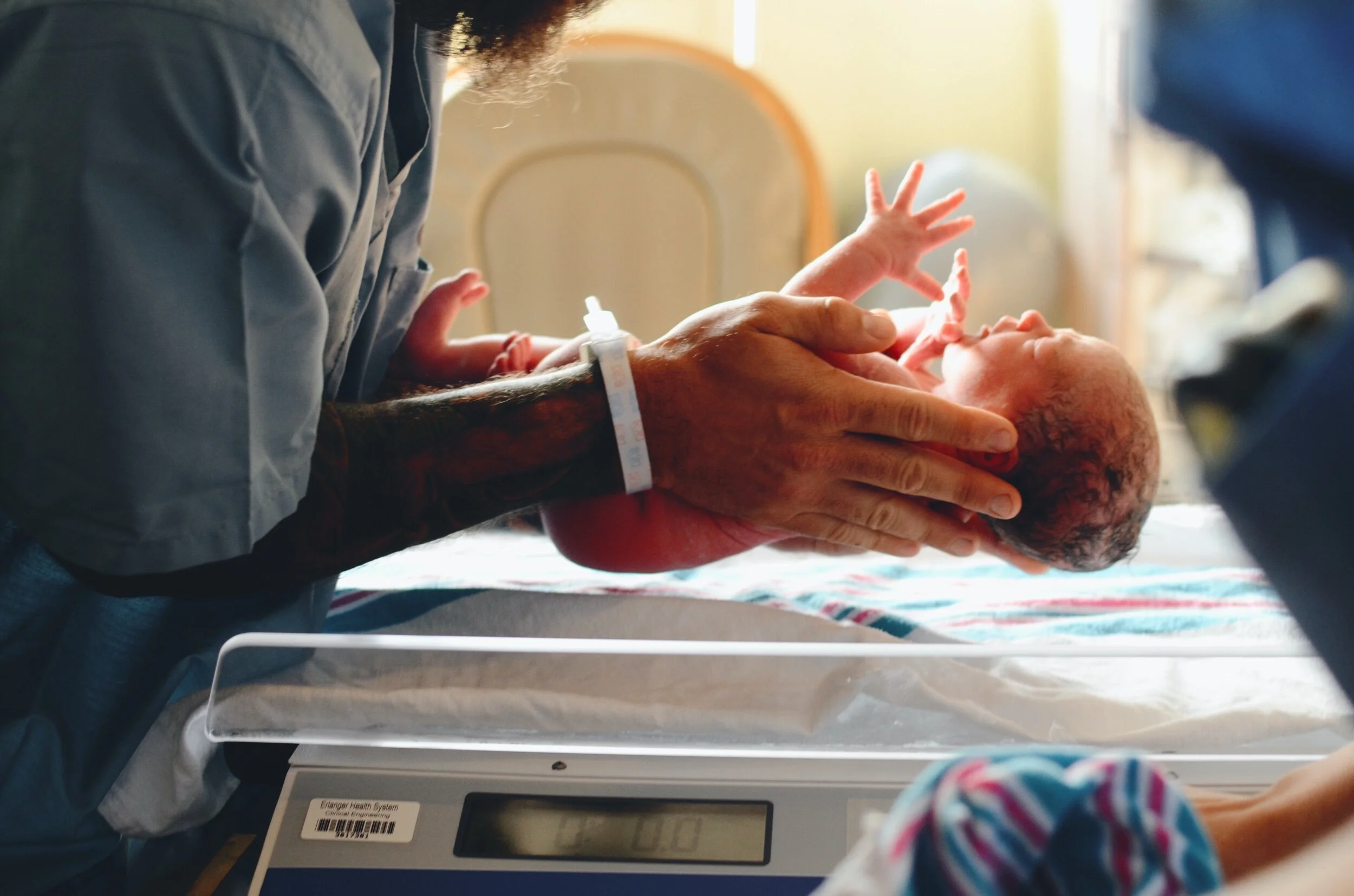
Giving Birth during the Pandemic and What to Expect
I heard this information today and I wanted to share it with you. Giving birth, especially the first time can be stressful because you don’t 100% know what to expect or how your body and baby are going to respond when labor begins. This is also true with subsequent births because no birth experience is the same.
But, right now in light of world events, giving birth in a hospital or birth center looks different. There are added precautions and PPE policies in place. Along with, the limited number of visitors you can have present.
I heard this information today and I wanted to share it with you. Giving birth, especially the first time can be stressful because you don’t 100% know what to expect or how your body and baby are going to respond when labor begins. This is also true with subsequent births because no birth experience is the same.
But, right now in light of world events, giving birth in a hospital or birth center looks different. There are added precautions and PPE policies in place. Along with, the limited number of visitors you can have present.
Every hospital and birth center is different, but I think it is important to make informed decisions about you and your baby's care and to make an informed decision we must have information.
What to Expect
They may test you and you husband, spouse, birth coach, etc. for COVID-19. If you happen to test positive whether symptomatic or not, you will be separated from your baby after giving birth for possibly up to 10 days and it will be recommended to you that you do not breastfeed your baby due to the potential risk of exposure to your baby.
If your spouse, significant other, or your 1 visitor you are allowed, tests positive for COVID-19 they are asked to leave. Therefore, you give birth alone.
I have so many feelings about this right now. I am still working through all my thoughts.
This would be a traumatic experience.
Being separated from your baby
Giving birth alone
Not breastfeeding your baby like you hoped you would.
Now I understand if the mother or support person is symptomatic to have advanced precautions, but not allowing you to be with your baby or breastfeed when you are asymptomatic is distressing to me. I say this because this makes me sad to think about being separated from your baby or not having any visitors to help support you during this time.
Research
Unfortunately, there is not enough evidence to support either decision, to separate or not or breastfeed or not. We don’t know enough about this virus to make this determination. Typically, if someone has influenza they are still able to breastfeed, but there are so many unknowns with COVID-19 that there is no way to make a hard and fast rule. And we do know, there is support for babies to get antibodies through breastfeeding and this helps support the immune system.
So… what to do with this information.
If your support person tests positive: if you can, have a “back-up” person available to be your 1 visitor.
It is within your rights to decline the separation of your baby and you can advocate breastfeeding your baby.
They may have options to have your baby in the room, just 6 feet away.
Or if you do decide to breastfeed wearing PPE and use good hand hygiene.
You can follow the hospital, doctor, or birth center recommendations for separation and not to breastfeed. To protect your baby potentially from COVID-19.
Discuss with your provider and the hospital or birth center what their policies or procedures are specific to their facility. Their recommendations for care and what all your options would be. This way you don’t go into it blindsided, while already stressed and have to make a decision you were not prepared for.
Be flexible with your birth plan. Births do not always go as expected so it would be beneficial to have some flexibility in what labor and the birth will look like
There is no judgement or right or wrong answers to whatever you decide.
My youngest was born 3 years ago and I can’t imagine what it would be like being pregnant or giving birth during this time. I’m praying for all the moms and families right now in these situations.
With care,
Alison
Alison is a postpartum Therapist in the state of Colorado. She specializes in maternal mental health, specifically perinatal mood and anxiety disorders. Reach out if you or a loved one are needing additional support or counseling during this time by calling 970-795-2100

How to Stop Panic Attacks
You have maybe been there before, that impending doom, feeling and thinking you are going to die. Maybe even have gone to the emergency room because the panic would not dissipate. Having a panic attack is a scary feeling. In the moments of having a panic attack, there is no control over your body and how you feel, which leads to further panic. Sometimes, people think they are having a heart attack due to the pain in their chest and feeling like they are going to die.
You have maybe been there before, that impending doom, feeling and thinking you are going to die. Maybe even have gone to the emergency room because the panic would not dissipate. Having a panic attack is a scary feeling. In the moments of having a panic attack, you feel as if there is no control over your body and how you feel, which leads to further panic. Sometimes, people think they are having a heart attack due to the pain in their chest and feeling like they are going to die.
Although panic attacks can be scary and feel like they come out of nowhere there are ways to prevent and treat panic attacks.
Let’s start with some common symptoms of a panic attack
pounding/racing heart beat
Sweating
Shaking
Fear of “going crazy”
Feeling detached from reality
Difficulty breathing
Sense of impending doom, death, terror
Chest pain or discomfort
Nausea
Fear of dying
Facts about panic attacks
Although they feel scary, they do not cause any physical harm
Can be brief, but intense; from 10-30 minutes; sometimes up to an 1 hour
Can be random or be triggered by situational anxiety, i.e. driving, large crowds, etc.
Panic disorder occurs when there is frequent worry about future attacks and there is a change in behavior to avoid the attacks
https://www.therapistaid.com/therapy-worksheet/panic-info-sheet/anxiety/none
Ways to prevent/stop panic attacks
Relaxation Techniques
Progressive muscle relaxation. Here is an example of one: https://www.therapistaid.com/therapy-worksheet/progressive-muscle-relaxation-script/anxiety/none
Mindfulness exercises
Bringing yourself into the present moment and grounding yourself
5-4-3-2-1 technique: What are 5 things you can see? What are 4 things you can feel? What are 3 things you can hear? What are 2 things you can smell? And what is 1 thing you can taste?
Body awareness exercise: take 5 long deep breaths, breathing in through your nose and out through your mouth and notice the feeling of calm in your body
Meditation
Deep pressure on arms and legs-squeezing arms and legs up and down can create a sense of calm
Stand and push against the wall with your palms. Pay attention to the feelings of tension in your body this creates
Mental exercises/Distraction skills
Name all the objects you see
Count backwards from 100 by 7
Choose an object and describe it in very minute details: texture, size, weight, color, what is serves
Read something backwards, letter by letter
Name all members in your family and their ages
Ways panic attacks are treated
Cognitive Behavior Therapy
Evidenced based practice that has positive effects in treating panic attacks and panic disorder. Cognitive Behavior Therapy or CBT for short is a psychotherapy treatment that addresses unhelpful ways of thinking and helps to re-evaluate those thinking patterns to create change. CBT helps people use problem solving skills to better cope with situations. CBT helps people learn ways to calm one’s body and relax their minds.
Exposure Therapy
Gradual exposure to feared situations in a safe environment. As the person becomes more exposed to the fear or threat overtime the symptoms become less intense and terrifying.
Medication
Medication can be an option to address panic disorders as a short term treatment as it is not addressing the underlying issues related to the panic. It is recommended medication be used in conjunction with a form of psychotherapy to treat the panic disorder.
If panic attacks or your anxiety are getting in the way of your daily living. It may be beneficial to consider counseling to address the underlying factors that are contributing to the panic and anxiety.
If you live in Colorado, call today 970-795-2100 to start therapy.
Get your life back and start living the life you’ve always wanted
With care,
Alison
Alison offers online counseling services to those living in the state of Colorado, specializing in working with moms and teen girls with anxiety and mood disorders. She lives in Colorado with her family and enjoys her morning coffee and a good book.

Maternal Mental Health Awareness: What is Maternal Mental Health
A time to raise public and professional awareness of perinatal mental illness
Advocating for women affected by it
Opportunity to help women gain access to information, care, and support
What is maternal mental health?
Pregnancy and postpartum period can affect your emotional well being
Mental health is also referred to as emotional health or well being. Is always important and impacts your physical well being too.
Maternal Mental Health awareness week
May 4-10th
A space to talk about mental illness during and after pregnancy
A time to raise public and professional awareness of perinatal mental illness
Advocating for women affected by it
Opportunity to help women gain access to information, care, and support
What is maternal mental health?
Pregnancy and postpartum period can affect your emotional well being
Mental health is also referred to as emotional health or well being. Is always important and impacts your physical well being too.
Aspects of healthy emotional well being:
Feeling confident
Smiling
Good self-esteem
Happy for others
Feeling content
Participating in daily activities
While some women experience great joy and happiness others have rapid shifts in their mood, overwhelming anxiety, and increase in stress level during pregnancy or the postpartum period.
These symptoms used to be referred to as postpartum depression, but it wasn’t all encompassing of the symptoms some women experience during this time.
Now these symptoms are referred as Perinatal Mood and Anxiety Disorders (PMAD) which include the following:
-depression
-anxiety
-bipolar disorders
-Obsessive Compulsive Disorder (OCD)
-psychosis (rare)
If you or someone you know is expressing distress call and reach out today. Feel free to email me with any questions to alison@hartmantherapyco.com
Everyday this week I will be posting related to maternal mental health! Be sure to check them out
with care,
alison
Https://Maternalmentalhealthalliance.org/news/maternal-mental-health-awareness-week-2020/
Alison is the owner of Hartman Therapy in Colorado. She offers online counseling helping tired, overwhelmed moms, sad teens, and frustrated parents. Alison has been working with adolescents, families, and adults for the past 7 years helping to build healthy, resilient families. She specializes in perinatal mental health and teen girl depression and anxiety.